

A skills matrix is one of those tools that sounds bureaucratic until you actually use one. Once you map your team’s capabilites against a clear set of competencies, the picture that emerges is usually more useful than anything you’d get from informal observation alone.
What is a Skills Matrix?
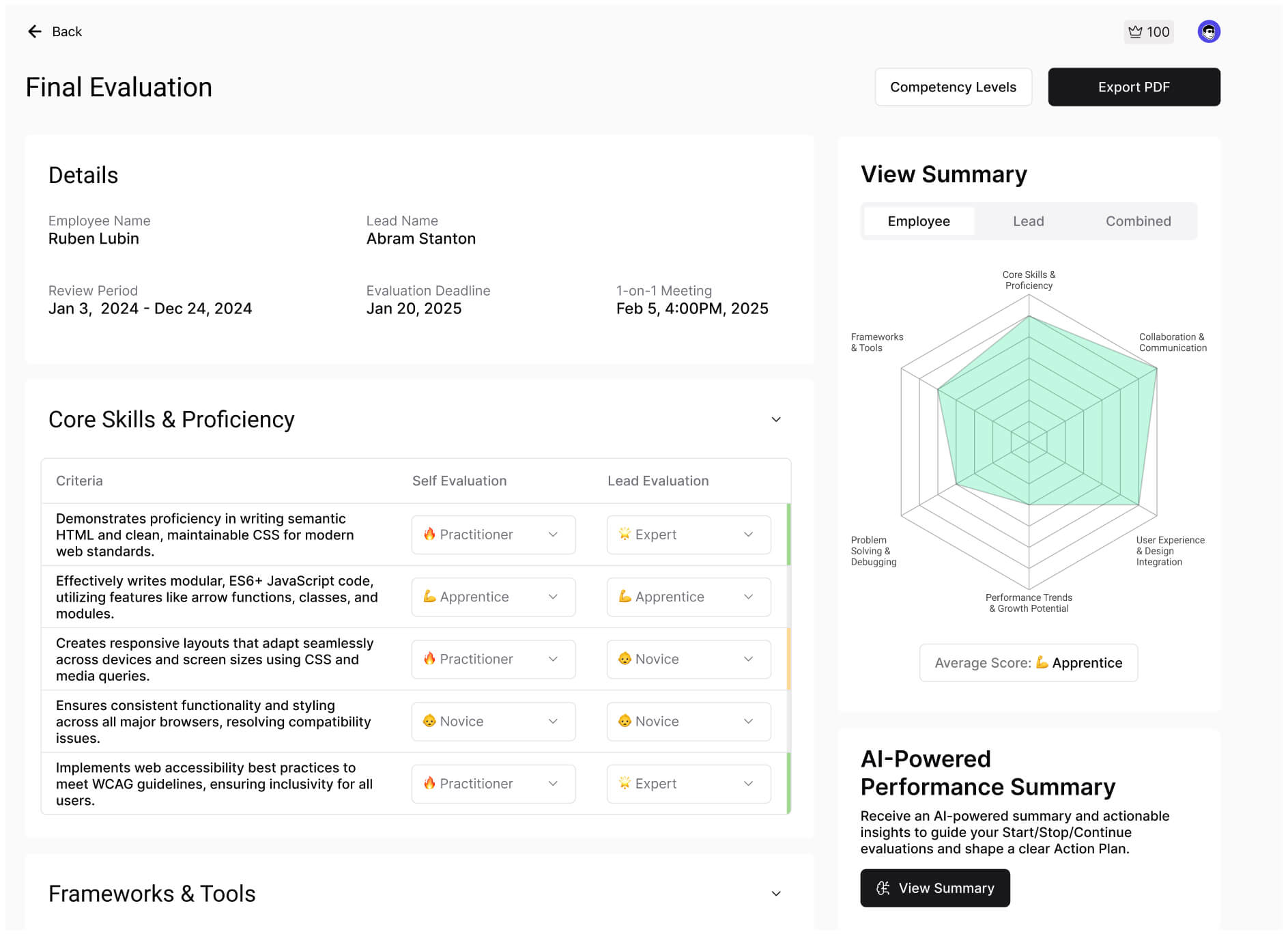
A skills matrix is a visual framework that maps employees against a defined set of competencies, showing proficiency levels across various skills relevant to their roles or departments. At a glance, it shows you:
The SHRM toolkit on employee development recommends skills matrices as a foundational tool for building transparent career ladders and ensuring every team member has a clear, personalized growth path.
- Individual and team capabilities
- Skill gaps and development opportunities
- Bench strength for critical competencies
- Career progression pathways
- Cross-training possibilities
At its most basic level, a skills matrix is a grid — team members on one axis, relevant skills on the other, with proficiency ratings at each intersection.
Why Skills Matrices Are Worth the Effort
Organizations that actually maintain skills matrices tend to see benefits across three areas:
Better Performance Management
- Objective evaluation: Concrete, specific assessment criteria replace vague impressions
- Focused feedback: Conversations target specific competencies, not general performance
- Visible progression: Historical data shows actual development over time
- Shared expectations: Both manager and employee know what good looks like
More Targeted Development Planning
- Targeted training: You know exactly which gaps to address instead of guessing
- Better use of budget: Development spending goes where it’s actually needed
- Succession readiness: You can see who’s close to being ready for advancement
- Internal expertise: Identifies who can mentor others on specific skills
Strategic Workforce Planning
- Capability mapping: Shows whether the organization can actually execute on strategic plans
- Risk spotting: Surfaces dangerous single points of knowledge before they become problems
- Hiring guidance: Makes it clear which skills need to come from outside
- Team composition: Informs how to staff projects and initiatives
Building a Skills Matrix That Actually Gets Used
Step 1: Define the Purpose and Scope
Before building anything, be clear about what you’re trying to accomplish:
- Primary objective: Performance evaluation, development planning, or strategic workforce planning
- Scope: Individual teams, departments, or the whole organization
- Update frequency: Quarterly, semi-annually, or annually
- Integration: How the matrix connects with other HR processes
Step 2: Identify Relevant Skills
Build a focused list of skills that actually matter. This means skills that:
- Connect to strategic priorities: Support what the organization is actually trying to do
- Reflect real job requirements: Map to essential functions, not aspirational ones
- Cover both technical and soft skills: Functional competencies alone miss half the picture
- Include emerging needs: Skills that will matter in 1-2 years, not just today
Good sources for skill identification:
- Job descriptions and competency models
- Industry benchmarks
- Strategic plans
- Direct input from managers and employees
Step 3: Establish Clear Proficiency Levels
The rating scale needs to mean something. Common approaches:
Numeric Scale (1-5)
- Basic awareness, requires significant guidance
- Working knowledge, regular supervision needed
- Independent application in routine situations
- Advanced application including complex scenarios
- Expert level, can teach others
Descriptive Categories
- Novice: Basic conceptual understanding
- Developing: Applied knowledge with support
- Proficient: Independent application
- Advanced: Strategic application and adaptation
- Expert: Thought leadership and innovation
Certification-Based Progression
- Level 1: Completed foundational training
- Level 2: Achieved basic certification
- Level 3: Attained advanced certification
- Level 4: Qualified as internal trainer
- Level 5: Recognized external authority
Step 4: Design the Matrix Format
Keep it usable. The format should make it easy to spot patterns at a glance:
Basic Grid
- Employees listed vertically
- Skills listed horizontally
- Proficiency ratings at intersections
- Color-coding for quick visual scanning
Useful additions
- Skill groupings by category
- Weighting to show relative importance
- Historical comparison views
- Filtering and sorting
Digital implementation
- Integration with performance management systems
- Real-time updating
- Reporting and analytics
- Employee self-assessment portals
Step 5: Gather Assessment Data
Single-source ratings are rarely accurate. Use multiple inputs:
Multi-Source Input
- Manager assessment based on observed performance
- Employee self-assessment
- Peer evaluations for collaborative skills
- Project outcomes and deliverable quality
- Certifications and test scores where applicable
Assessment Guidelines
- Provide clear definitions for each proficiency level
- Use behavioral examples that illustrate each level concretely
- Train assessors for consistent application
- Require supporting evidence for ratings
Review Process
- Manager and employee discussion of initial ratings
- Calibration across teams
- Formal approval workflow
- Documentation of final assessments
Step 6: Turn Data Into Action
The matrix is only useful if it drives decisions:
Individual Level
- Build personalized development plans that address specific gaps
- Set up mentoring relationships based on complementary skill profiles
- Assign stretch projects that build needed capabilities
- Create clear progression milestones
Team Level
- Identify critical gaps that need immediate attention
- Spot single points of failure before they create problems
- Build cross-training opportunities into the work plan
- Align development resources with actual team priorities
Organizational Level
- Assess readiness for strategic initiatives before committing
- Identify enterprise-wide skill deficiencies
- Inform hiring and training investment decisions
- Track how capabilities are changing over time
Keeping It Current
A skills matrix that’s six months out of date is barely better than no matrix. Maintenance matters:
Regular Updates
- Scheduled reassessments: Quarterly or semi-annual formal reviews
- Event-triggered reviews: Reassess after major projects or role changes
- Progress documentation: Record development activities and their actual impact
- Continuous feedback: Enable ongoing input between formal cycles
Evolving the Skill Set
- Annual skill review: Evaluate whether the skills in the matrix still matter
- Emerging skill integration: Add new capabilities as they become relevant
- Obsolete skill retirement: Remove skills that no longer connect to real needs
- Future skill forecasting: Build in capabilities needed 2-3 years out
Process Refinement
- User feedback: Ask managers and employees what’s working and what isn’t
- Calibration: Improve consistency across evaluators over time
- Integration: Strengthen connections with other HR processes
- Utilization tracking: Monitor how often the matrix actually informs decisions
Example Skills Matrices for Different Teams
Engineering Team
Technical Skills
- Programming languages (Java, Python, C++, etc.)
- Architecture design
- Database optimization
- Test automation
- DevOps practices
- Security implementation
Project Skills
- Requirements analysis
- Estimation accuracy
- Technical documentation
- Code review quality
- Bug identification
- Release management
Soft Skills
- Technical communication
- Client interaction
- Mentoring
- Problem-solving
- Adaptability
- Team collaboration
Sales Team
Product Knowledge
- Feature expertise
- Competitive positioning
- Technical understanding
- Solution configuration
- Pricing structures
- Implementation requirements
Sales Process Skills
- Prospect qualification
- Needs assessment
- Proposal development
- Objection handling
- Negotiation
- Closing techniques
Relationship Skills
- Trust building
- Executive engagement
- Active listening
- Value articulation
- Account management
- Partner collaboration
Leadership Team
Strategic Competencies
- Vision development
- Strategic planning
- Market analysis
- Innovation management
- Change management
- Risk assessment
Operational Competencies
- Resource optimization
- Performance management
- Process improvement
- Decision quality
- Execution focus
- Crisis response
People Competencies
- Talent development
- Team building
- Conflict resolution
- Delegation
- Feedback delivery
- Inspiration and motivation
Common Problems and How to Fix Them
Challenge 1: Inconsistent Ratings
Problem: Managers apply the scale differently.
Fix:
- Provide detailed behavioral examples for each proficiency level
- Run calibration sessions where managers compare their assessments
- Require multiple input sources rather than one person’s judgment
Challenge 2: Too Many Skills
Problem: The matrix becomes unwieldy with 40+ competencies.
Fix:
- Focus on the 15-20 competencies that most connect to strategic goals
- Group related skills into broader categories
- Build role-specific matrices rather than one universal version
Challenge 3: Outdated Data
Problem: The matrix is accurate at launch and irrelevant within months.
Fix:
- Use digital platforms that make updates easy
- Schedule regular review cycles and actually stick to them
- Assign clear ownership for maintaining accuracy
Challenge 4: Data Collected, Never Used
Problem: The matrix is built, filed, and ignored.
Fix:
- Connect the matrix directly to development planning conversations
- Reference it in regular performance discussions, not just annual reviews
- Make clear what actions each identified gap should trigger
Measuring Whether It’s Working
Process Metrics
- Completion rate: Percentage of employees with current assessments
- Assessment quality: Consistency and evidence basis of ratings
- Update frequency: How timely are refreshes
- Utilization: How often the matrix is actually referenced in decisions
Development Metrics
- Gap closure rate: Progress in addressing identified deficiencies
- Training alignment: Learning investments matched to matrix gaps
- Certification progress: Formal qualifications attained for tracked skills
- Internal mobility: Movement driven by demonstrated competencies
Business Impact Metrics
- Performance correlation: Relationship between skill profiles and actual outcomes
- Retention impact: Whether development progress correlates with lower turnover
- Time-to-proficiency: How fast new hires or role-changers get up to speed
- Strategic readiness: Whether capability alignment is improving over time
Evalio‘s Skills Matrix Capabilities
Evalio’s platform includes skills matrix functionality that makes it practical to implement and maintain:
- Interactive Skills Matrix: A dynamic, color-coded visualization of team and individual capabilities that gives instant visibility into organizational strengths and gaps.
- Historical Tracking: The platform automatically tracks skill development over time, so progression paths are visible rather than assumed.
- Gap Analysis: Evalio identifies critical skill gaps and suggests targeted development opportunities using AI, which actually saves manager time rather than creating more work.
Organizations using Evalio’s skills matrix functionality report saving over 210 hours per manager annually on performance evaluation processes, while improving the specificity of development planning.
Conclusion
Skills matrices work because they make the invisible visible. What’s usually a diffuse sense of who’s strong and who isn’t becomes a structured picture you can actually act on. The organizations that do this well don’t treat the matrix as a one-time project. They treat it as ongoing infrastructure, updating it as roles shift, skills evolve, and strategic priorities change.
Done right, a well-maintained skills matrix connects directly to every meaningful talent decision: who gets developed, who gets promoted, what to hire for, and whether the organization can actually execute its plans. That’s a lot of value from a grid.